

How to calculate the pressure resistance of rectangular seamless pipes?
Jul 22, 2025
As a supplier of rectangular seamless pipes, I often encounter inquiries from customers about how to calculate the pressure resistance of these pipes. Understanding the pressure resistance is crucial for ensuring the safe and efficient operation of various applications, such as construction, machinery, and fluid transportation systems. In this blog post, I will share some key factors and methods for calculating the pressure resistance of rectangular seamless pipes.
Factors Affecting Pressure Resistance
The pressure resistance of rectangular seamless pipes is influenced by several factors, including the material properties, pipe dimensions, and the internal and external forces acting on the pipe.
Material Properties
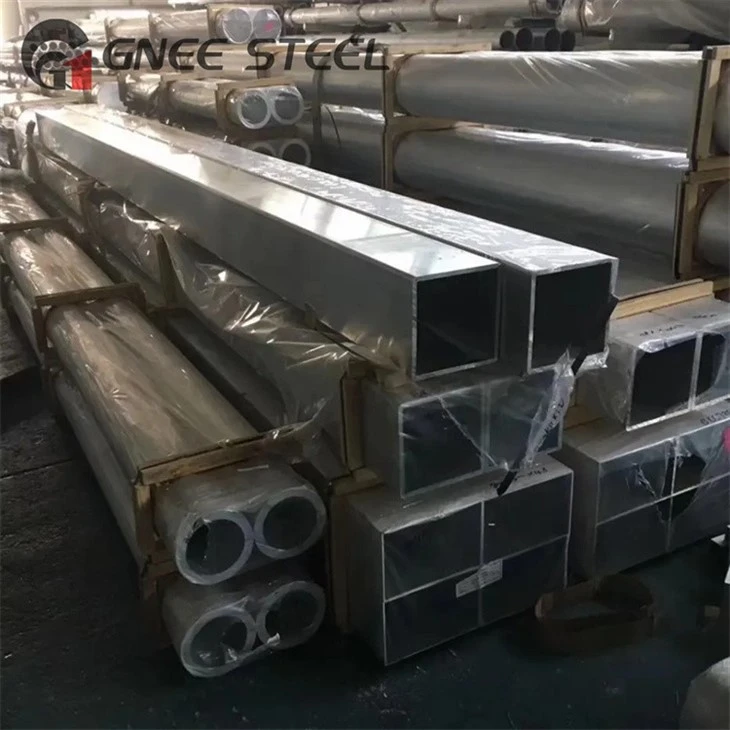
The material of the rectangular seamless pipe plays a significant role in determining its pressure resistance. Different materials have different mechanical properties, such as yield strength, tensile strength, and modulus of elasticity. For example, stainless steel pipes, like the 321 Seamless Steel Square Tube, Seamless SUS632 Stainless Steel Square Tube, and Seamless 316Ti Stainless Steel Square Tube, are known for their high strength and corrosion resistance, which make them suitable for high - pressure applications.
The yield strength (Sy) of the material is a critical parameter. It represents the stress at which the material begins to deform plastically. A higher yield strength generally means the pipe can withstand higher pressures before permanent deformation occurs.
Pipe Dimensions
The dimensions of the rectangular seamless pipe, including the wall thickness (t), the width (b), and the height (h) of the cross - section, also affect its pressure resistance.
- Wall Thickness: A thicker wall can provide more resistance to internal pressure. As the wall thickness increases, the pipe can better withstand the forces exerted by the fluid or gas inside.
- Cross - Sectional Dimensions: The width and height of the rectangular cross - section influence the distribution of stress within the pipe. A more compact cross - section (i.e., a smaller aspect ratio of width to height) may have better pressure - bearing capacity in some cases.
Internal and External Forces
In addition to the internal pressure, external forces such as bending, torsion, and axial loads can also affect the pressure resistance of the pipe. For example, if the pipe is subjected to bending while under internal pressure, the stress distribution becomes more complex, and the overall pressure - bearing capacity may be reduced.
Calculation Methods
There are several methods to calculate the pressure resistance of rectangular seamless pipes, and here are two common approaches:
Simplified Formula Method
For a rectangular seamless pipe under pure internal pressure, a simplified formula can be used based on the thin - wall assumption. The thin - wall assumption is valid when the ratio of the wall thickness to the average diameter of the cross - section is less than 0.1.
The maximum allowable internal pressure (P) can be calculated using the following formula:
[P=\frac{2\times Sy\times t}{b}]
where Sy is the yield strength of the material, t is the wall thickness, and b is the width of the rectangular cross - section.
This formula is derived from the equilibrium of forces acting on a small element of the pipe wall. However, it should be noted that this formula is a simplified approximation and has certain limitations. It does not consider the effects of external forces, stress concentration, and the non - uniformity of stress distribution in the rectangular cross - section.
Finite Element Analysis (FEA)
Finite Element Analysis is a more accurate and comprehensive method for calculating the pressure resistance of rectangular seamless pipes. This method divides the pipe into a large number of small elements and analyzes the stress and strain distribution within each element using numerical methods.

- Modeling: First, a three - dimensional model of the rectangular seamless pipe is created, taking into account its exact dimensions, material properties, and boundary conditions.
- Meshing: The model is then divided into a finite number of elements, such as tetrahedral or hexahedral elements. The quality of the mesh can affect the accuracy of the analysis.
- Analysis: The internal pressure and other external forces are applied to the model, and the software calculates the stress and strain distribution within the pipe. The maximum stress in the pipe can be determined, and compared with the yield strength or ultimate strength of the material to evaluate the pressure resistance.
FEA can consider various factors, such as the non - linear behavior of the material, the complex stress distribution in the rectangular cross - section, and the interaction between internal and external forces. However, it requires specialized software and expertise to perform the analysis.
Safety Factors
When calculating the pressure resistance of rectangular seamless pipes, it is essential to consider safety factors. Safety factors are used to account for uncertainties in material properties, manufacturing processes, and operating conditions.
A typical safety factor (SF) ranges from 1.5 to 3.0, depending on the application and the level of risk. The allowable pressure (P_allow) considering the safety factor can be calculated as:
[P_{allow}=\frac{P}{SF}]
where P is the calculated maximum pressure from the above methods.
Conclusion
Calculating the pressure resistance of rectangular seamless pipes is a complex task that requires considering multiple factors, including material properties, pipe dimensions, and external forces. The simplified formula method provides a quick and approximate way to estimate the pressure resistance, while the Finite Element Analysis offers a more accurate and detailed analysis.
As a supplier of rectangular seamless pipes, we are committed to providing high - quality products that meet the pressure requirements of our customers. If you have any questions about the pressure resistance of our products or need assistance in selecting the right pipes for your application, please feel free to contact us for further discussion and procurement negotiation.
References
- Timoshenko, S. P., & Goodier, J. N. (1970). Theory of Elasticity. McGraw - Hill.
- Budynas, R. G., & Nisbett, J. K. (2011). Shigley's Mechanical Engineering Design. McGraw - Hill.