
Finned Tubes

Your Professional Seamless Carbon Steel Tube Manufacturer in China!
 

Gnee Steel (tianjin) Co., Ltd is a supply chain integrated enterprise including steel plate, coil, profile, outdoor landscape design and processing. Founded in 2008, with 5 million RMB registered capital, Gnee has made impressive progress and development in steel market with Gnee People more than 18 years hard fighting. The company has always focused on providing quality products and excellent customer service and has earned a good reputation in the industry. In the future, the company will continue to invest in technology and equipment to further improve production capacity and product quality.


Why Choose Us
 

Advanced Equipment

We have comprehensive and professional equipment including: cold rolling mills, hot rolling mills, various welding equipment, cooling equipment and testing equipment.

Broad Market

We have cooperation partners in 160 countries and regions around the world, with more than 18 major partners, and have received consistent praise from them.

Quality Control

Our factory's products are produced using domestic advanced production technology and independent research and development processes, and have passed ISO90001 quality management system certification and safety production standardization construction.

Perfect Service System

We provide one-to-one service. If you have any questions, you can contact us at any time and we will provide you with professional answers and suggestions.

Rich Experience

Our company was established in 2008 and has 18 years of experience in the industry. And the factory has more than 200 experienced employees.

Certification

We have passed qualification certification in many countries and have multiple certification certificates.
 

First 1234 Last 1/4

Introduction of Finned Tubes


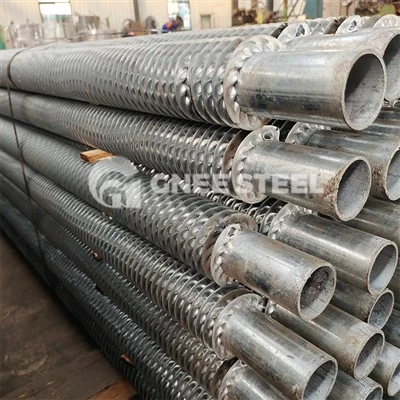
Finned tubes are elongated flat tubes that are made of aluminum cladded carbon steel and are provided with brazed aluminum fins. These tubes are used in a series in heat exchangers. The advantage they offer over ordinary tubes is that the fins offer greater contact with the liquid outside. This quickens the exchange of heat between the liquid inside the tube and the one outside it. With a normal tube, the rate of exchange of heat would be much slower. Finned tubes are particularly useful in the case of air heat exchangers. In an air heat exchanger, the heat transfer is to take place between a liquid and gas. With the heat coefficient of the air side being lower, a finned tube can be exceptionally helpful. A finned tube increases the surface area and thus helps in faster heat transfer between the components.


Types of Finned Tubes

Elfin Finned Tubes
Elfin finned tubes have found takers and wide-scale usage in hydropower generator coolers. They are typically used to cool the generator used in these stations. In an Elfin tube, the fin strip is mechanically forced on the outer side to ensure adhesion of the fin to the heat exchanger tube.

Bulleted Fins
Bulleted fins are similar to Elfin tubes and have become popular as a convenient and cost-effective method to attach strip fins to tubes. They are manufactured by manually placing fins over the tubes and pushing and pulling a bullet through the tube to expand the tube wall out into the fins.

L Finned Tubes
The L finned mechanical tube receives its name from the letter L, which it creates from the cross-sectional view. L finned tubes maximize the heat transfer capacity and enhance corrosion protection. These heat exchanger tubes accommodate temperatures between 150 and 170 degrees. They come in ductile metals, such as aluminum or copper, that can withstand the compression around the fin's base.

LL Finned Tubes
LL finned tubes are manufactured in the same way the L fins. However, they have LL fins that have overlapping feet and completely enclose the base tube. As a result, they are more resistant to corrosion. These heat exchanger tubes usually are available in copper and aluminum and have a maximum operating temperature similar to that of L finned tubes.

KL Finned Tubes
The KL in the name of this category of tubes stands for Knurled Finned. The fin in these tubes is wrapped around the tube and the foot is rolled out into the outer surface of the pre-knurled tube and secured at each end. These fins are made of thin strips of metal, machined into an L-shaped foot.

G Embedded Finned Tube
The G embedded finned tube has a unique design feature wherein the fin is inserted and welded into a helical groove cut into the tubes. These mechanical tubes are perfect for higher temperatures. They are durable and best suited for high thermal cycling because they can withstand temperatures up to 400 degrees.

Extruded Finned Tube
Two metals are used to manufacture extruded finned tubes. The outer surface is usually aluminum, while the inner tube is of any material. These heat exchanger tubes are quite popular because they offer excellent corrosion protection of the base tube. Also, they exclude all exposure to any outside fluid. Extruded finned tubes have found application in heat pipes, dry air coolers, energy recovery in the air exhaust system, etc.

Wire Finned Tube
The wire loop tube offers excellent heat transfer because it promotes turbulence in the fluid passing over it. These tubes consist of an elongated wire loop that increases the surface. The loops are spirally wound onto the top of the tube wall and fixed using a binding wire at the loop's base. These tubes can withstand temperatures of up to 250 degrees.


Benefits of Finned Tube
 

Structural Integrity
Finned tubes have an integrated structure that enhances their thermal conductivity and improves their structural integrity. The fins are attached to the outer surface of the tube, increasing the surface area for heat transfer. This structural design also makes finned tubes more resistant to deformation, cracking, and corrosion, making them suitable for a wide range of industrial applications.


Large Heat Flow Rate
Finned tubes have a large heat flow rate, low resistance, and a compact structure. They can be used in industrial furnaces, where they can reduce the convective heat transfer coefficient and improve the heat transfer coefficient in the furnace. The result is more efficient use of heat and lower energy costs.


High Heat Transfer Coefficient
Finned tubes can increase the heat transfer coefficient by increasing the auxiliary area, making them suitable for applications with strict heat requirements. The heat transfer coefficient of finned tubes is proportional to the square of the flow velocity, and it is larger than the thermal conductivity of the outer wall of the tube at the same flow rate. This means that finned tubes can transfer heat more efficiently than regular tubes.


Long Service Life
Finned tubes have good thermal insulation performance and can last for more than 50 years, depending on the working conditions. They are more durable than regular tubes because of their integrated structure, which protects them from damage caused by corrosion, erosion, and other forms of wear and tear.


High Product Strength
Finned tubes are designed to bear the bending stress under normal working conditions without deformation, cracking, or serious corrosion. This high product strength ensures that they can withstand the demands of industrial applications and maintain their structural integrity over time.


The Main Functions of The Finned Tube
321 Seamless Stainless Finned Tubes
316 Seamless Stainless Finned Tubes
309 Seamless Stainless Finned Tubes
ASTM A335 Finned Tube

Heat Transfer Enhancement
The primary purpose of finned tubes is to improve heat transfer efficiency. By increasing the surface area available for heat exchange, fins facilitate the transfer of thermal energy between the fluid flowing inside the tube (such as a liquid or gas) and the surrounding environment. This increased surface area allows for more effective cooling or heating processes.

Heat Recovery
Finned tubes are widely used in heat recovery systems, where waste heat is captured and utilized. The extended surface area provided by the fins allows for more efficient heat recovery, enabling the extraction of heat from exhaust gases, hot air streams, or other high-temperature fluids. This recovered heat can then be utilized in various industrial processes, reducing energy consumption and increasing overall system efficiency.

Air Cooling and Heating
Finned tubes are commonly employed in air-cooling and air-heating applications. The fins on the tube enhance heat transfer to or from the air, depending on the specific application. These tubes are extensively used in air conditioning systems, refrigeration units, radiators, and heat exchangers where efficient heat dissipation or heat absorption is required.

Condensation and Evaporation
Finned tubes are also utilized in condensers and evaporators. The increased surface area provided by the fins allows for more effective condensation or evaporation of the fluid within the tube. This is particularly useful in applications such as refrigeration systems and air conditioning units where phase change processes are involved.

Temperature Control
The use of finned tubes enables precise temperature control in various industrial processes. The extended surface area allows for more efficient heat transfer, making it easier to maintain specific temperature ranges within a system. This is crucial in applications such as chemical processing, power generation, oil and gas refining, and HVAC systems.


How Are Finned Tubes Manufactured?
 
01/

Tube Production
The process begins with the production of the base tube, often composed of materials like alloy steel. For precision and uniformity, seamless tubes, especially those cold-drawn, are frequently preferred. This initial step sets the foundation for a tube that can withstand the rigors of diverse industrial applications.

02/

Surface Coating (Optional)
In certain applications, a surface coating may be applied to the serrated finned tubes to enhance corrosion resistance and overall durability. This optional step ensures the tubes can withstand harsh operating environments, extending their lifespan.

03/

Fin Formation
The fins are then meticulously attached to the tube surface using advanced techniques. The process involves machining or extruding the serrations onto the fins, a critical step that demands precision to ensure the effectiveness of the serrations in disrupting the boundary layer. The intricacy of this process emphases the importance of precision engineering in achieving optimal heat transfer efficiency.

04/

Quality Control
Stringent quality control measures are implemented throughout the manufacturing process to guarantee the structural integrity and performance of the finned tubes. Non-destructive testing methods, such as ultrasonic testing and visual inspections, are commonly employed to identify and rectify any defects that may compromise the functionality of the tubes.


What Is the Difference Between High Finned Tube and Low Finned Tube
 

Fin Density

High Fin Tubes:
These exhibit a remarkable characteristic—higher fin density. The tightly packed fins create a labyrinth of surfaces, significantly amplifying the available area for heat transfer. This intricate design is invaluable in applications where optimizing heat exchange efficiency is paramount.

Low Fin Tubes:
In contrast, low fin tubes boast a more relaxed fin density, with fins strategically spaced farther apart. This deliberate design choice reduces surface area, making these tubes ideal for scenarios where heat transfer efficiency is crucial but doesn't demand the highest possible density.

Heat Transfer Efficiency

High Fin Tubes:
The heightened fin density of high fin tubes directly translates to superior heat transfer efficiency. This feature is particularly advantageous in applications where precision temperature control or exceptional thermal performance is non-negotiable.

Low Fin Tubes:
While still delivering effective heat transfer, low-fin tubes cater to scenarios where the demand for enhanced efficiency is not as critical. Applications in the food and beverage industry, for instance, often find these tubes suitable, where maintaining a consistent temperature is essential, but not necessarily at peak efficiency levels.

Surface Area-to-Volume Ratio

High Fin Tubes:
The intensified fin density of high fin tubes contributes to an elevated surface area-to-volume ratio. This architectural feature enhances heat dissipation, rendering these tubes well-suited for applications where managing high temperatures is a primary concern.

Low Fin Tubes:
Conversely, low fin tubes, characterized by a more modest fin density, exhibit a comparatively lower surface area-to-volume ratio. This design makes them apt for applications where moderate heat transfer is sufficient and considerations such as cost-effectiveness take precedence.

Applications

High Fin Tubes:
Process Industries: Chemical and petrochemical sectors leverage high fin tubes' enhanced heat transfer capabilities for optimal performance in their processes.
Power Generation: They are pivotal in power plants, optimizing heat exchanger efficiency and contributing to energy production.
HVAC Systems: They find a natural home in HVAC systems, ensuring top-tier thermal performance for heating, ventilation, and air conditioning applications.

Low Fin Tubes:
Food and Beverage: Low-fin tubes prove invaluable in industries where precise temperature control is paramount for food and beverage production processes.
General HVAC: They offer a cost-effective yet reliable solution in HVAC applications where maximizing efficiency is not the primary concern.

Materials

High Fin Tubes:
They are designed for applications demanding top-tier heat transfer efficiency and are often crafted from materials prioritizing conductivity and durability. Common materials include high-grade stainless steel and alloys, ensuring resistance to corrosion and high-temperature environments. The meticulous engineering of high fin tubes focuses on the fin density and extends to the material composition, guaranteeing optimal performance in challenging conditions.

Low Fin Tubes:
Similarly, low fin tubes are tailored to meet the demands of applications where efficient heat transfer is essential but don't require the heightened performance of high fin tubes. Materials like carbon steel and other cost-effective alloys are often chosen for crafting low-fin tubes. This strategic material selection ensures a balance between performance and affordability, making low-fin tubes a practical choice for industries prioritizing economical solutions without compromising functionality.


Our Factory


As a well-known steel pipe manufacturer and supplier in China, our factory has multiple steel pipe production lines, including 5 hot-rolled seamless steel pipe production lines, 3 cold-rolled seamless steel pipe production lines, 8 stainless steel pipe production lines, and 6 resistance welded pipe production lines, 5 capacitor welded pipe production lines, 3 3PE anti-corrosion processing production lines, 2 2PE anti-corrosion processing production lines, 2 galvanizing processing production lines, etc.

productcate-1-1
productcate-520-325
productcate-520-325
productcate-520-325
productcate-520-325
productcate-520-325


Our Certification


productcate-1-1
productcate-1-1
productcate-1-1
productcate-1-1


Ultimate FAQ Guide to Finned Tubes


Q: How do finned tubes affect heat exchange?

A: These fins significantly increase the surface area available for heat transfer, which is crucial for efficient heat exchange. In this type of heat exchanger, one fluid (typically a hot fluid) flows through the inside of the tube, while another fluid (usually a cooler fluid) circulates around the outside of the tube.

Q: How are finned tubes made?

A: Currently, the production of finned tubes used shielded welding consumable electrode active gas (MAG) and welding with a laser beam, which has contributed to a significant increase in the efficiency of the production process. Another variation is to connect pipes with fins welded to high-frequency currents.

Q: What is the function of the finned tube?

A: Finned tubes are the main components of heat exchangers. They are a series of tubes where fins have been added on the outside to increase the contact area with the outside fluid, to exchange heat and between the fluid inside the tube and the fluid outside the tube.

Q: What is the temperature of the finned tube?

A: The operating temperature range of extruded finned tubes is usually between 200-450°C, but it may also be used at higher or lower temperatures, depending on factors such as material, structure, and operating environment.

Q: What are the problems with exchanger heat finned tube?

A: Reduced heat transfer efficiency is a common issue that operators may encounter with solid-finned tubes. This can result from accumulating deposits on the tube surfaces, hindering heat transfer between the fluid and the tube. As mentioned in the maintenance tips, regular cleaning is crucial to prevent this problem.

Q: What material is used in exchanger heat finned tube?

A: Carbon steel tubes are best for low-budget projects where corrosion is not an issue. Copper or aluminum fins are a popular choice in cases where a high-heat transfer needs to be achieved. However, copper is slightly more expensive than aluminum.

Q: What is extruded finned tube process?

A: The fins are manufactured by Extruding the Fins on the Aluminum Muff Tube which is made to Fit with close tolerance over the Base Tube. The Extrusion takes place on a Continuous Fin Extruder with Three Tooling rolls and extrusion takes place at high pressures in the range of 1200 psi.

Q: What is the difference between bare tube and finned tube?

A: In the difference between finned tube and bare tube usage is: by using finned tubes required tube quantity on heat exchanger can be reduced up to 1/6. So finned tubes can reduce the equipment cost and also equipment sizes.

Q: Why finned tubes are used?

A: Finned tubes are used to relay heat in any industry where hot fluid has to be transferred to cold fluid through a proper medium. They expand the exterior of the tube. Finned tubes have the capacity to take the place of bare tubes with reduced volume and cost.

Q: What is the use and advantage of finned tube?

A: Integral finned tubes have the advantages of high thermal conductivity, uniform heat dissipation, and long service life. They are mainly used in heating furnaces and industrial kiln furnaces or heat exchangers.

Q: Which is better plain tube or finned tube?

A: The results show that the temperature drop in case of plain tube is 4 times lower than the temperature drop of finned tube. This means the heat transfer of finned tube is significantly better than plain tube. The example shows us that a finned tube has an explicit advantage in comparison with plain tubes.

Q: What are the types of fins used in exchanger heat finned tube?

A: Fins are extended surfaces attached to the outside of the heat exchange tubes. They increase the surface area of the tubes and, as a result, improve heat transfer efficiency. Fins can be of various shapes, including plain, serrated, or corrugated, and are typically made of materials like aluminum or copper.

Q: What are the advantages of exchanger heat finned tube?

A: Exchanger heat finned tubes have a large heat flow rate, low resistance, and a compact structure. They can be used in industrial furnaces, where they can reduce the convective heat transfer coefficient and improve the heat transfer coefficient in the furnace. The result is more efficient use of heat and lower energy costs.

Gnee Steel (Tianjin) Co., Ltd. is one of the most professional finned tubes manufacturers and suppliers in China, specialized in providing high quality customized service. We warmly welcome you to wholesale discount finned tubes for sale here and get free sample from our factory. Good service and low price are available.

finned tubes for global warming mitigation, finned tubes for cafes, stainless steel finned tubes

(0/10)

clearall