



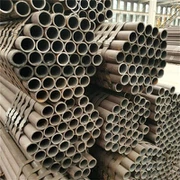
API 5CT L80-13Cr Casing And Tubing
L80-13Cr is a martensitic stainless steel that conforms to the American Petroleum Institute (API) 5CT standard and is primarily used in the manufacture of oil well tubing. This material enhances its corrosion resistance by adding chromium, exhibiting significant corrosion resistance in carbon dioxide-containing oil and gas environments and marine extraction, making it suitable for high-temperature, high-pressure downhole operations.
Gnee Steel (Tianjin) Co., Ltd. is one of the most reliable manufacturers and suppliers of api 5ct l80-13cr casing and tubing in China, also supports customized service with low price. Welcome to wholesale discount api 5ct l80-13cr casing and tubing for sale here from our factory. Contact us for free sample.
L80-13Cr is a martensitic stainless steel that conforms to the American Petroleum Institute (API) 5CT standard and is primarily used in the manufacture of oil well tubing. This material enhances its corrosion resistance by adding chromium, exhibiting significant corrosion resistance in carbon dioxide-containing oil and gas environments and marine extraction, making it suitable for high-temperature, high-pressure downhole operations.
API 5CT L80-13Cr Color Band Identification
| Grade | Color Band (Each ~2 inches wide) |
|---|---|
| L80-13Cr | White background + Two green bands |
API 5CT L80-13Cr Casing and Tubing Manufacturing Types
| Item | Description |
|---|---|
| Manufacturing Process | Hot piercing + Pilger rolling + Sizing + Heat treatment |
| Forming Method | Seamless (no weld seam) |
| Main Applications | Casing, Tubing |
| Applicable Standards | API 5CT (11th Edition), NACE MR0175/ISO 15156 for sulfide stress corrosion cracking (SSC) resistance |
Heat Treatment Methods for L80-13Cr Pipes
| Process | Parameters and Notes |
|---|---|
| Quenching | Heat to ~950°C, hold, then rapidly cool (oil or liquid nitrogen) to form martensite structure |
| Tempering | Reheat to ~620°C, hold for 1.5–2 hours, then cool to relieve stress and improve toughness and resistance to stress corrosion cracking (SCC) |
| Normalizing | Optional process for microstructure uniformity, temperature range: 750–850°C |
| Quench & Tempering (Q&T) | Core strengthening method combining quenching and tempering |
Reference Inspection for L80-13Cr Casing and Tubing
| Inspection Item | Method and Requirements |
|---|---|
| Ultrasonic Testing (UT) | Detect internal defects, detection rate ≥99.9% |
| Eddy Current Testing (ET) | Detect surface cracks, inclusions, etc. |
| Hydrostatic Test | Conducted at API-specified pressure to verify sealing integrity |
| Chemical Analysis | Spectrometric analysis of C, Cr, Mo, Ni, etc., to ensure compliance with standard |
| Mechanical Testing | Tensile, impact, and hardness tests |
| Dimensional Tolerance Check | Verify outer diameter, wall thickness, and length deviations per API 5CT requirements |
Surface Condition – L80 13Cr
| Item | Requirements |
|---|---|
| Surface Finish | Internal and external surfaces treated via sandblasting, shot blasting, or grinding to remove scale and burrs |
| Surface Quality | No cracks, folds, seams, or delamination; minor scratches allowed if non-functional |
| Thread Surface | Precision-machined, coated with anti-rust oil, and fitted with coupling protector |
| Cleanliness | Free of oil, moisture, and dust to meet downhole deployment requirements |
API 5CT L80-13Cr Chemical Composition
| Element | Content (%) | Function and Notes |
|---|---|---|
| C | ≤0.18 | Low carbon design reduces risk of intergranular corrosion |
| Cr | 12.5–14.5 | Key element forming Cr₂O₃ passive film for corrosion resistance |
| Mo | 0.4–1.0 | Enhances pitting resistance, especially in Cl⁻ environments |
| Ni | ≤1.0 | Improves toughness and inhibits hydrogen-induced cracking (HIC/SSC) |
| Mn | 0.25–1.00 | Increases strength and workability |
| S | ≤0.005 | Strictly controlled to reduce sulfide inclusions and corrosion sources |
| P | ≤0.025 | Same as above |
API 5CT L80-13Cr Mechanical Properties
| Performance Index | Standard Value (API 5CT) | Typical Measured Value |
|---|---|---|
| Yield Strength (MPa) | ≥552 | 620–680 |
| Tensile Strength (MPa) | 655–827 | 720–780 |
| Elongation (%) | ≥18 | 22–25 |
| Impact Toughness (J) | ≥40 @ -20°C | 55–65 |
| Hardness (HB) | ≤255 | 220–240 |
API 5CT L80-13Cr Connection Type, Ends and Couplings
| Item | Description |
|---|---|
| End Preparation | Plain End (PE), External Upset (EU), Integral Joint |
| Thread Type | API threads (e.g., BTC, LTC, STC); some manufacturers support premium connections (e.g., TP-CQ, Hydril PH-6) |
| Coupling | Standard separate coupling with sealed threads, coated with anti-rust oil |
| Connection Certification | Complies with API 5B; some products certified by DNV GL or NORSOK |
API 5CT L80-13Cr Dimension and Tolerances
| Item | Allowable Deviation |
|---|---|
| Outer Diameter (D) | D ≤ 101.6 mm: ±0.79 mm D ≥ 114.3 mm: +1.0%, -0.5% |
| Wall Thickness (S) | -12.5% |
| Length | Range 1: 4.88–7.62 m Range 2: 7.62–10.36 m Range 3: 10.36–14.63 m |
| Weight | Single pipe: +6.5%, -3.5% Full load: ±1.75% |
API 5CT L80-13Cr Specification
| Item | Parameters / Description |
|---|---|
| Standard | API 5CT (11th Edition) |
| Grade | L80-13Cr |
| Material Type | Martensitic Stainless Steel |
| Main Applications | High-sulfur gas fields, CO₂ flooding wells, ultra-deep wells, offshore platforms |
| Operating Temperature | 30°C – 150°C |
| Max Working Pressure | ≤7.5 MPa |
| Corrosion Resistance | Resistant to CO₂, H₂S, and seawater; corrosion rate is only 1/30–1/300 of N80Q steel |
| Manufacturers | Wuxi Derun Special Steel, Tianjin Dalipu, Baosteel, etc. |
Hardness Of API 5CT Gr. L80-13Cr OCTG Tubing
Maximum Brinell Hardness (HB): ≤255 HB
Typical Range: 220–240 HB
Hardness control is critical to prevent sulfide stress cracking (SSC), and must be tested and recorded after tempering .
L80-13Cr Casing Size
| Size (in) | Outer Diameter (mm) | Typical Wall Thickness (mm) | Weight Code | Application |
|---|---|---|---|---|
| 4½ | 114.3 | 6.88 – 9.17 | STC | Main casing for medium-depth wells |
| 5 | 127.0 | 7.52 – 10.03 | PSLB | Structural support in deep wells |
| 5½ | 139.7 | 7.72 – 11.51 | PLB | Isolation of high-pressure zones |
| 7 | 177.8 | 8.05 – 12.07 | P-5 | Surface or intermediate casing |
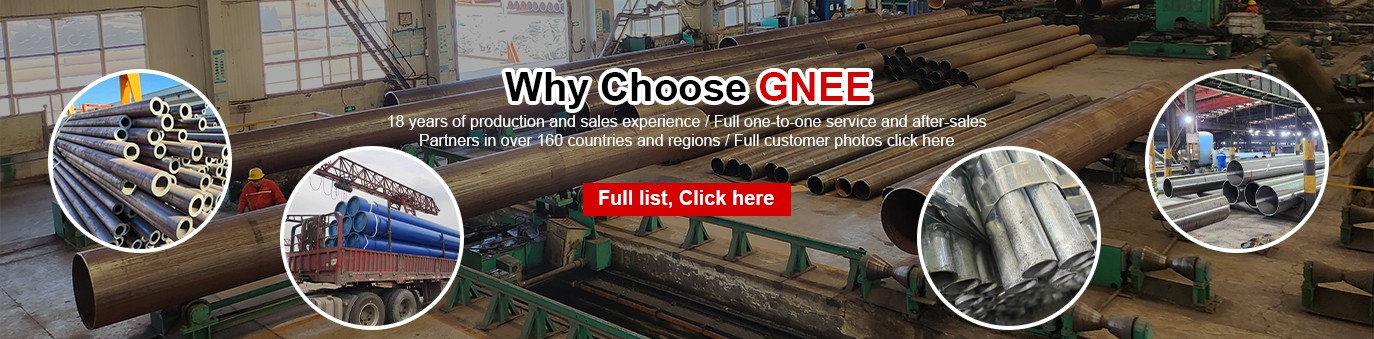
GNEE API 5CT L80-13Cr OCTG factory

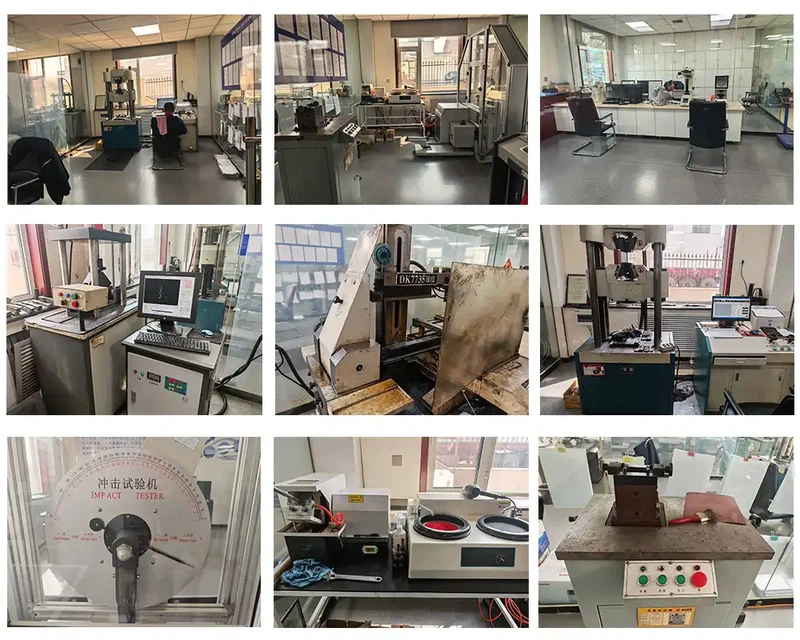
GNEE API 5CT L80-13Cr oil casing pipe test and inspection
FAQ
What is the difference between L80-1, L80 9Cr, and L80 13Cr in API 5CT?
Under the API 5CT standard, L80-1, L80 9Cr, and L80 13Cr all belong to the L80 steel grade, with a minimum yield strength of 552 MPa. However, they differ significantly in alloy composition, corrosion resistance, and applicable environments: L80-1 is a carbon steel suitable for general working conditions; L80 9Cr and L80 13Cr are chromium alloy steels specifically designed for corrosive environments, with L80 13Cr exhibiting the strongest corrosion resistance.
Are L80 9Cr and L80 13Cr available as welded pipe?
According to API 5CT standards, L80 9Cr and L80 13Cr are typically not supplied as welded pipes, but rather as seamless pipes to ensure structural integrity and sealing performance in highly corrosive environments.
Why is thread inspection important for L80 casing and tubing?
Thread inspection is crucial for L80-13Cr casing and tubing, directly affecting the sealing, structural integrity, and corrosion resistance of downhole connections. As a high-alloy martensitic stainless steel, L80-13Cr is used in harsh oil and gas environments, and thread defects can lead to blowouts, leaks, or major safety accidents. Rigorous thread inspection ensures that connections meet API standards, preventing downhole accidents caused by sealing failures, stress concentrations, or improper threading.
Hot Tags: api 5ct l80-13cr casing and tubing, China api 5ct l80-13cr casing and tubing manufacturers, suppliers, factory, welded steel boiler pipe, JIS G3460 Steel pipes, carbon steel seamless tubing for packaging machinery, Structural tubing, Oil casing steel pipe, Seamless Steel Pipe for Oil And Gas



Send Inquiry
