

What are the anti - corrosion measures for Galvanized Seamless Steel Pipe in marine environments?
Sep 22, 2025
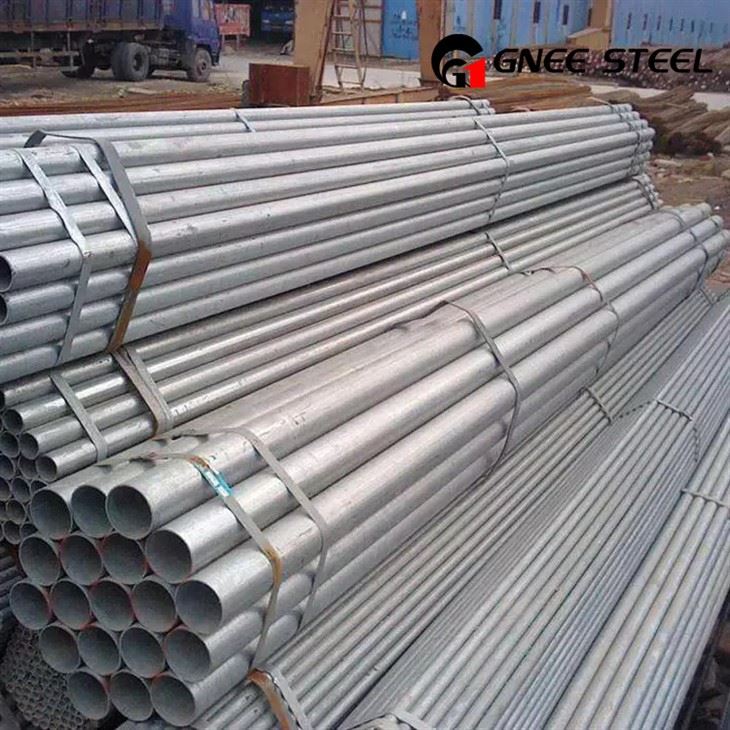
Galvanized seamless steel pipes are widely used in marine environments due to their excellent mechanical properties and corrosion resistance. However, the harsh conditions in the marine environment, such as high salinity, high humidity, and strong ultraviolet radiation, pose significant challenges to the long - term performance of these pipes. As a reliable galvanized seamless steel pipe supplier, we understand the importance of anti - corrosion measures for these pipes in marine applications. In this blog, we will explore various anti - corrosion measures for galvanized seamless steel pipes in marine environments.
1. Galvanization Process and Its Limitations in Marine Environments
Galvanization is a common method to protect steel pipes from corrosion. It involves coating the steel pipe with a layer of zinc, which acts as a sacrificial anode. When exposed to a corrosive environment, the zinc corrodes preferentially, protecting the underlying steel. The galvanization process can be divided into hot - dip galvanizing and electro - galvanizing.
Hot - dip galvanizing is a widely used method where the steel pipe is immersed in a bath of molten zinc. This process forms a thick and durable zinc coating on the surface of the pipe. Electro - galvanizing, on the other hand, uses an electric current to deposit a thin layer of zinc on the steel surface.
In marine environments, although galvanized coatings provide initial protection, they have limitations. The high salinity in seawater can accelerate the corrosion of the zinc coating. Over time, the zinc layer may be depleted, exposing the underlying steel to corrosion. For example, in areas with high tidal ranges, the pipes are constantly exposed to wet - dry cycles, which can further exacerbate the corrosion of the zinc coating.
2. Additional Coating Systems
To enhance the corrosion resistance of galvanized seamless steel pipes in marine environments, additional coating systems can be applied.

2.1 Epoxy Coatings
Epoxy coatings are widely used in marine applications due to their excellent adhesion, chemical resistance, and mechanical properties. They can form a dense and continuous film on the surface of the galvanized pipe, preventing the penetration of seawater and oxygen.
There are different types of epoxy coatings, such as solvent - based epoxy coatings and water - based epoxy coatings. Solvent - based epoxy coatings have good chemical resistance but may release volatile organic compounds (VOCs) during the curing process. Water - based epoxy coatings are more environmentally friendly but may have slightly lower performance in some aspects.
For instance, Galvanized Pipe A106 Gr B can be coated with an epoxy coating to improve its corrosion resistance in marine environments. The epoxy coating can be applied in multiple layers to achieve the desired thickness and performance.
2.2 Polyurethane Coatings
Polyurethane coatings offer excellent weather resistance, abrasion resistance, and flexibility. They can withstand the harsh environmental conditions in the marine environment, including UV radiation and mechanical damage.
Polyurethane coatings can be used as a top - coat over an epoxy primer. This combination provides a high - performance coating system that can effectively protect the galvanized seamless steel pipe. For example, on ASTM A53 B Galvanized Pipe, a polyurethane top - coat can be applied after an epoxy primer to enhance its durability in the marine environment.
3. Cathodic Protection
Cathodic protection is another important anti - corrosion measure for galvanized seamless steel pipes in marine environments. It works by making the steel pipe the cathode of an electrochemical cell, thereby preventing its corrosion.
3.1 Sacrificial Anode Cathodic Protection
In sacrificial anode cathodic protection, a more active metal (such as magnesium, aluminum, or zinc) is connected to the galvanized steel pipe. The sacrificial anode corrodes preferentially, providing a continuous supply of electrons to the steel pipe and keeping it cathodic.
This method is relatively simple and cost - effective. However, the sacrificial anodes need to be replaced periodically as they are consumed during the corrosion process. For S145 - 8 Carbon Seamless Steel Pipe used in marine environments, sacrificial anode cathodic protection can be an effective way to extend its service life.
3.2 Impressed Current Cathodic Protection
Impressed current cathodic protection uses an external power source to supply a direct current to the steel pipe. An inert anode, such as graphite or mixed metal oxide, is used in this system.
This method can provide a more precise and controllable level of protection. It is suitable for large - scale marine structures and pipes where a high level of protection is required. However, it requires more complex equipment and regular maintenance.
4. Design and Installation Considerations
Proper design and installation are also crucial for the anti - corrosion of galvanized seamless steel pipes in marine environments.
4.1 Pipe Layout
The layout of the pipes should be designed to minimize the accumulation of water and debris. Pipes should be installed with a proper slope to ensure the drainage of seawater. Avoiding areas with stagnant water can significantly reduce the risk of corrosion.
4.2 Joint Sealing
The joints between the pipes should be properly sealed to prevent the ingress of seawater. Rubber gaskets or sealants can be used to ensure a tight seal. In addition, the joints should be protected with appropriate coatings to prevent corrosion at these vulnerable areas.
4.3 Isolation from Other Metals
Galvanized seamless steel pipes should be isolated from other metals with different electrochemical potentials to avoid galvanic corrosion. Insulating materials can be used to separate the pipes from other metal structures.
5. Regular Inspection and Maintenance
Regular inspection and maintenance are essential to ensure the long - term performance of galvanized seamless steel pipes in marine environments.
5.1 Visual Inspection
Visual inspection should be carried out regularly to check for signs of corrosion, such as rust spots, blistering, or peeling of the coating. Any damaged areas should be repaired immediately to prevent further corrosion.
5.2 Coating Maintenance
The coatings on the pipes should be maintained regularly. If the coating is damaged, it should be repaired or reapplied. The thickness of the coating can be measured periodically to ensure its effectiveness.
5.3 Cathodic Protection Monitoring
For pipes with cathodic protection systems, the performance of the cathodic protection should be monitored regularly. The potential of the steel pipe and the current output of the system should be measured to ensure that the protection is adequate.
Conclusion
In conclusion, galvanized seamless steel pipes are widely used in marine environments, but they require effective anti - corrosion measures to ensure their long - term performance. Galvanization provides an initial layer of protection, but additional coating systems, cathodic protection, proper design and installation, and regular inspection and maintenance are all necessary to enhance the corrosion resistance of these pipes.
As a galvanized seamless steel pipe supplier, we are committed to providing high - quality products and comprehensive anti - corrosion solutions for marine applications. If you are interested in our products or need more information about anti - corrosion measures for galvanized seamless steel pipes in marine environments, please feel free to contact us for procurement and further discussions.
References
- Fontana, M. G. (1986). Corrosion Engineering. McGraw - Hill.
- Uhlig, H. H., & Revie, R. W. (1985). Corrosion and Corrosion Control. Wiley - Interscience.
- ASTM International. (20XX). Standards related to galvanized steel pipes and coatings.