

What is the cavitation corrosion resistance of API 5L GRB Steel Pipe?
Jun 19, 2025
Hey there! As a supplier of API 5L GRB Steel Pipe, I often get asked about the cavitation corrosion resistance of this particular type of steel pipe. So, let's dive right in and break it down.
First off, what's cavitation corrosion? Well, cavitation is basically the formation and collapse of vapor bubbles in a liquid. When these bubbles collapse near a metal surface, they create high - energy shockwaves. Over time, these shockwaves can cause damage to the metal, leading to cavitation corrosion. It's a big deal in industries where pipes are constantly in contact with flowing liquids, like in oil and gas, water treatment, and power generation.
Now, let's talk about API 5L GRB Steel Pipe. API 5L GRB is a common grade of steel pipe used in the oil and gas industry for transporting natural gas, oil, and other fluids. It's known for its good mechanical properties and weldability. But how does it hold up against cavitation corrosion?
The cavitation corrosion resistance of API 5L GRB Steel Pipe depends on several factors. One of the key factors is the chemical composition of the steel. API 5L GRB steel typically contains elements like carbon, manganese, phosphorus, sulfur, silicon, and copper. Carbon provides strength to the steel, but too much carbon can make the steel more brittle and less resistant to corrosion. Manganese helps improve the strength and toughness of the steel, and it also has some beneficial effects on corrosion resistance. Phosphorus and sulfur are usually kept at low levels because they can have a negative impact on the steel's properties, including its corrosion resistance.

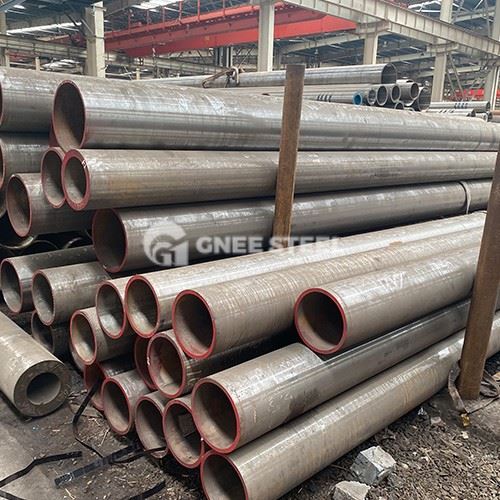
Silicon can improve the steel's resistance to oxidation and some forms of corrosion. Copper, on the other hand, can enhance the steel's resistance to atmospheric corrosion and also has some positive effects on cavitation corrosion resistance. The presence of these elements in the right proportions helps the API 5L GRB Steel Pipe to form a protective oxide layer on its surface, which can act as a barrier against cavitation corrosion.
Another important factor is the microstructure of the steel. The way the grains are arranged in the steel can significantly affect its cavitation corrosion resistance. A fine - grained microstructure generally provides better resistance to cavitation corrosion compared to a coarse - grained one. This is because fine - grained steels have more grain boundaries, which can act as barriers to the propagation of cracks caused by the shockwaves from bubble collapse.
The surface finish of the API 5L GRB Steel Pipe also plays a role. A smooth surface finish can reduce the likelihood of bubble formation and attachment, which in turn can decrease the risk of cavitation corrosion. Rough surfaces, on the other hand, can provide nucleation sites for bubbles, increasing the chances of cavitation damage.
In comparison with other types of pipes, how does API 5L GRB Steel Pipe stack up? For example, the 316l Pipe is a stainless steel pipe that is well - known for its excellent corrosion resistance. Stainless steels like 316L contain a high percentage of chromium and nickel, which form a very stable and protective oxide layer on the surface. This makes 316L pipes highly resistant to a wide range of corrosive environments, including cavitation corrosion. However, API 5L GRB Steel Pipe is more cost - effective and is better suited for applications where the corrosive conditions are not as severe.
The Chromoly 4130 Seamless Steel Tube is another option. Chromoly 4130 is a low - alloy steel that contains chromium and molybdenum. These elements improve the strength, toughness, and corrosion resistance of the steel. While it may have good cavitation corrosion resistance in some applications, it may not be as widely used in the oil and gas transportation as API 5L GRB Steel Pipe due to differences in cost and specific application requirements.
The A335 P15 Chrome Moly Seamless Pipe is often used in high - temperature and high - pressure applications. It contains chromium and molybdenum, which give it good strength and corrosion resistance at elevated temperatures. But when it comes to cavitation corrosion in normal temperature and pressure fluid transportation, API 5L GRB Steel Pipe may be a more practical choice in terms of cost and availability.
To improve the cavitation corrosion resistance of API 5L GRB Steel Pipe, there are several measures that can be taken. One approach is to apply a protective coating on the surface of the pipe. Coatings can act as a physical barrier between the steel and the corrosive fluid, preventing direct contact and reducing the risk of cavitation corrosion. Another method is to control the flow conditions of the fluid inside the pipe. By reducing the flow velocity and turbulence, the formation and collapse of vapor bubbles can be minimized.
In some cases, heat treatment can also be used to modify the microstructure of the steel and improve its cavitation corrosion resistance. For example, normalizing or quenching and tempering can refine the grain structure and enhance the steel's mechanical properties and corrosion resistance.
So, if you're in the market for a reliable steel pipe for fluid transportation and are concerned about cavitation corrosion, API 5L GRB Steel Pipe can be a great option. It offers a good balance between cost, mechanical properties, and cavitation corrosion resistance. Whether you're in the oil and gas industry, water treatment, or any other field that requires the transportation of fluids, API 5L GRB Steel Pipe can meet your needs.
If you're interested in learning more about API 5L GRB Steel Pipe or are looking to make a purchase, feel free to reach out. We're here to provide you with the best products and services. Our team of experts can answer all your questions and help you find the right solution for your specific application.
References
- ASM Handbook, Volume 13A: Corrosion: Fundamentals, Testing, and Protection.
- API Specification 5L: Specification for Line Pipe.
- "Corrosion of Metals" by George S. Painter.