

What is the surface roughness requirement for A106 GRB Steel Pipe?
Jul 03, 2025
As a supplier of A106 GRB Steel Pipe, I often encounter questions from customers regarding various technical specifications, and one frequently asked question is about the surface roughness requirement. In this blog, I will delve into the details of the surface roughness requirement for A106 GRB Steel Pipe, its significance, and how it impacts the overall performance of the pipe.
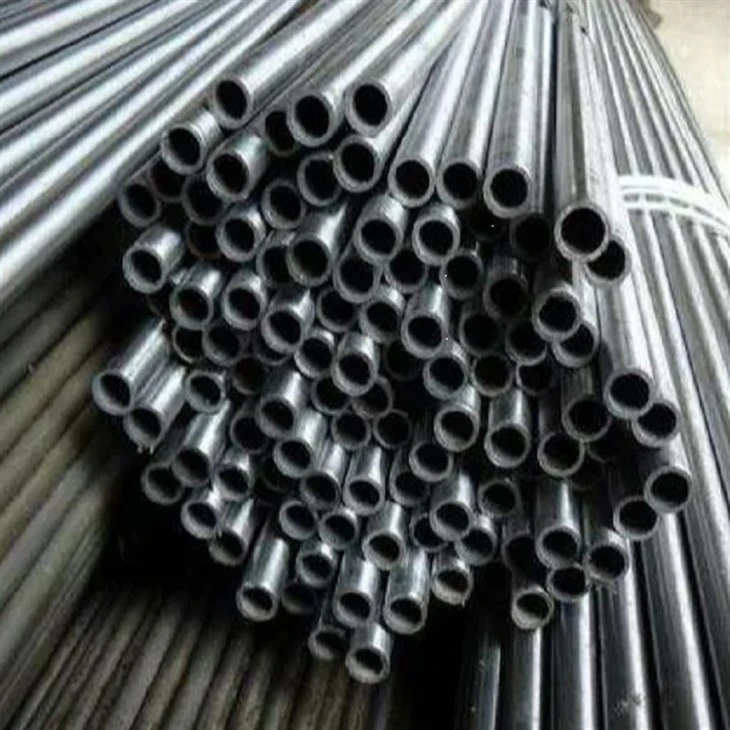

Understanding A106 GRB Steel Pipe
A106 GRB Steel Pipe is a widely used seamless carbon steel pipe that conforms to the ASTM A106 standard. It is primarily used for high-temperature and high-pressure applications in industries such as oil and gas, power generation, and petrochemicals. The "GRB" designation indicates Grade B, which has a minimum yield strength of 35,000 psi and a minimum tensile strength of 60,000 psi.
Importance of Surface Roughness
Surface roughness plays a crucial role in the performance and durability of A106 GRB Steel Pipe. It affects several key aspects, including:
- Flow Characteristics: A smooth surface reduces friction and turbulence, allowing for more efficient fluid flow. This is particularly important in applications where the pipe is used to transport liquids or gases under high pressure.
- Corrosion Resistance: A rough surface can provide more sites for corrosion to initiate and propagate. By maintaining a smooth surface, the risk of corrosion can be minimized, extending the service life of the pipe.
- Weldability: Surface roughness can affect the quality of welds. A smooth surface ensures better contact between the pipe and the welding electrode, resulting in stronger and more reliable welds.
- Mechanical Properties: Excessive surface roughness can create stress concentrations, which may lead to premature failure of the pipe under load. A smooth surface helps to distribute stress more evenly, improving the overall mechanical properties of the pipe.
Surface Roughness Requirements for A106 GRB Steel Pipe
The surface roughness requirement for A106 GRB Steel Pipe is typically specified in terms of the arithmetic average roughness (Ra). Ra is the average deviation of the surface profile from the mean line over a specified sampling length. The specific Ra value required for A106 GRB Steel Pipe may vary depending on the application and the customer's requirements. However, a common range for Ra is between 125 and 250 microinches (3.2 and 6.3 micrometers).
In some cases, the surface roughness may also be specified in terms of the maximum peak-to-valley height (Rz). Rz is the difference between the highest peak and the lowest valley within a specified sampling length. The maximum Rz value for A106 GRB Steel Pipe is typically around 1000 microinches (25.4 micrometers).
Measuring Surface Roughness
There are several methods available for measuring surface roughness, including:
- Contact Profilometry: This method involves using a stylus to physically trace the surface profile of the pipe. The stylus moves across the surface, and the vertical displacement of the stylus is recorded to calculate the surface roughness parameters.
- Non-Contact Profilometry: Non-contact methods, such as optical profilometry and laser scanning, use light or lasers to measure the surface profile without physically touching the surface. These methods are often faster and more accurate than contact profilometry.
- Surface Roughness Gauges: Surface roughness gauges are handheld devices that use a variety of techniques to measure surface roughness. These gauges are convenient and easy to use, but they may not provide the same level of accuracy as more advanced measurement methods.
Controlling Surface Roughness
To ensure that the surface roughness of A106 GRB Steel Pipe meets the required specifications, several manufacturing processes can be used, including:
- Cold Drawing: Cold drawing is a process in which the pipe is pulled through a die to reduce its diameter and improve its surface finish. This process can significantly reduce surface roughness and improve the dimensional accuracy of the pipe.
- Heat Treatment: Heat treatment can be used to improve the mechanical properties of the pipe and also to reduce surface roughness. By heating the pipe to a specific temperature and then cooling it at a controlled rate, the grain structure of the steel can be refined, resulting in a smoother surface.
- Surface Finishing Operations: Surface finishing operations, such as grinding, polishing, and shot blasting, can be used to further improve the surface finish of the pipe. These operations can remove surface defects and reduce surface roughness to meet the required specifications.
Impact of Surface Roughness on Pressure Rating
The surface roughness of A106 GRB Steel Pipe can also have an impact on its pressure rating. A rough surface can increase the internal pressure drop within the pipe, reducing the effective pressure rating. Therefore, it is important to ensure that the surface roughness of the pipe is within the specified limits to maintain its pressure rating.
For more information on the pressure rating of schedule 40 steel pipe, you can visit Pressure Rating Of Schedule 40 Steel Pipe.
Other Considerations
In addition to surface roughness, there are several other factors that should be considered when selecting A106 GRB Steel Pipe, including:
- Wall Thickness: The wall thickness of the pipe should be selected based on the operating pressure and temperature of the application. A thicker wall provides greater strength and durability but may also increase the cost of the pipe.
- Diameter and Length: The diameter and length of the pipe should be selected based on the flow requirements and the available space in the installation.
- End Connections: The end connections of the pipe, such as threaded, welded, or flanged, should be selected based on the application and the customer's requirements.
Conclusion
Surface roughness is an important consideration when selecting A106 GRB Steel Pipe. It affects the flow characteristics, corrosion resistance, weldability, and mechanical properties of the pipe. By understanding the surface roughness requirements and using appropriate manufacturing processes, we can ensure that the A106 GRB Steel Pipe we supply meets the highest quality standards and performs reliably in a wide range of applications.
If you are in need of A106 GRB Steel Pipe or have any questions about surface roughness requirements, please feel free to contact us. We are a leading supplier of high-quality A106 GRB Steel Pipe and can provide you with the technical expertise and support you need to make the right choice for your application.
References
- ASTM A106 Standard Specification for Seamless Carbon Steel Pipe for High-Temperature Service
- ASME B31.3 Process Piping Code
- ISO 4287 Geometrical Product Specifications (GPS) - Surface texture: Profile method - Terms, definitions and surface texture parameters