

What is the pressure rating of welded carbon steel pipes?
May 29, 2025
Hey there! I'm a supplier of welded carbon steel pipes, and I often get asked about the pressure rating of these pipes. So, I thought I'd sit down and write a blog post to share what I know.
First off, let's talk about what pressure rating means. In simple terms, the pressure rating of a welded carbon steel pipe is the maximum amount of pressure that the pipe can safely handle without failing. This is super important because if a pipe is subjected to pressures higher than its rating, it can lead to leaks, bursts, and all sorts of other problems.
There are several factors that affect the pressure rating of welded carbon steel pipes. One of the most significant factors is the pipe's wall thickness. Generally speaking, the thicker the wall of the pipe, the higher its pressure rating. This is because a thicker wall can withstand more force without deforming or breaking. For example, a pipe with a thin wall might have a pressure rating of 100 psi (pounds per square inch), while a pipe with a much thicker wall could handle up to 500 psi or more.
The diameter of the pipe also plays a role. Smaller diameter pipes typically have higher pressure ratings than larger diameter ones. This is because the stress on the pipe wall is more evenly distributed in a smaller pipe. When the diameter is large, the stress can be more concentrated in certain areas, which can reduce the overall pressure - handling capacity.
The material of the carbon steel is another crucial factor. Different grades of carbon steel have different mechanical properties. For instance, high - strength carbon steel can handle more pressure compared to lower - grade carbon steel. The manufacturing process of the welded pipe also impacts the pressure rating. A well - welded pipe with proper quality control will have a more reliable pressure rating. If there are defects in the weld, such as porosity or incomplete fusion, it can significantly reduce the pipe's ability to withstand pressure.
Now, how do we determine the pressure rating of a welded carbon steel pipe? There are standards and formulas that are used in the industry. One of the most widely recognized standards is the ASME B31 series. These standards provide guidelines on how to calculate the pressure rating based on the pipe's dimensions, material properties, and other relevant factors.
For example, the Barlow's formula is often used to estimate the pressure rating of a thin - walled pipe. The formula is P = (2St)/D, where P is the internal pressure, S is the allowable stress of the material, t is the wall thickness of the pipe, and D is the outside diameter of the pipe. However, it's important to note that this formula has its limitations and is mainly applicable for thin - walled pipes.
When it comes to applications, understanding the pressure rating is vital. In the oil and gas industry, for example, pipes are used to transport high - pressure fluids. So, the pipes need to have a high enough pressure rating to ensure safe operation. In water supply systems, the pressure rating also matters. If the pipes can't handle the water pressure, it can lead to leaks and water wastage.
In industrial settings, such as chemical plants, pipes carry various chemicals under different pressures. Using pipes with the correct pressure rating is essential to prevent chemical spills and ensure the safety of the workers and the environment.
As a welded carbon steel pipe supplier, I always make sure to provide my customers with accurate information about the pressure rating of the pipes I offer. I work closely with manufacturers who follow strict quality control measures to ensure that the pipes meet the required standards.
If you're in the market for welded carbon steel pipes, you might also be interested in ASTM A312 Stainless Seamless Steel Pipe. These pipes have their own unique properties and pressure ratings, and they can be a great option depending on your specific application.
When you're choosing a welded carbon steel pipe, don't just focus on the price. It's crucial to consider the pressure rating and other technical specifications. A pipe with a lower price but an inadequate pressure rating can end up costing you more in the long run due to maintenance and replacement costs.

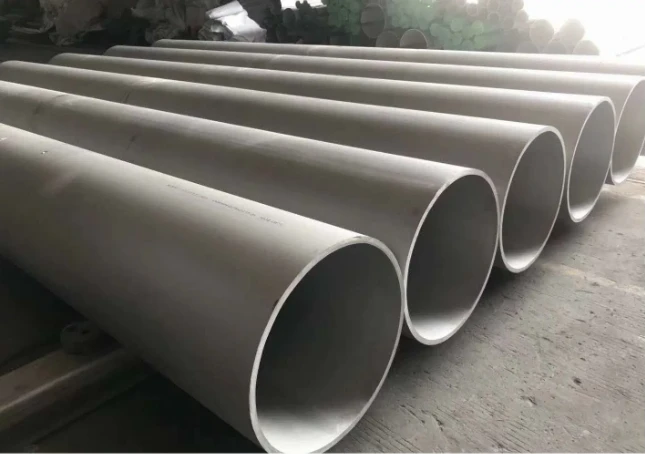
I'd love to help you find the right welded carbon steel pipes for your project. Whether you're building a small - scale water system or a large - scale industrial facility, I can provide you with pipes that meet your pressure requirements. If you have any questions about pressure ratings, pipe selection, or anything related to welded carbon steel pipes, feel free to reach out. We can have a detailed discussion about your needs, and I'll do my best to offer the most suitable solutions. So, don't hesitate to contact me for all your welded carbon steel pipe needs. Let's work together to ensure your project runs smoothly and safely.
References:
- ASME B31 series standards
- Engineering textbooks on pipe engineering and materials science