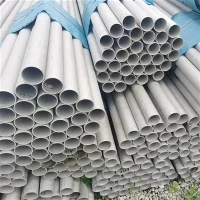
Cold Rolled Stainless Steel
Aug 17, 2023

Dimensional control: The cold rolling process allows precise control of the thickness and width of the stainless steel to ensure that the product meets specific dimensional requirements, allowing for a more delicate manufacturing process.
Surface quality: The surface of cold rolled stainless steel is generally smoother and flatter, with a more consistent surface quality than hot rolled stainless steel, making it suitable for applications with high appearance requirements.
Mechanical properties: The cold rolling process changes the grain structure of the stainless steel, which improves the hardness, strength and toughness of the material, making it suitable for more demanding engineering applications.
Corrosion resistance: Cold rolled stainless steel has better corrosion resistance than hot rolled stainless steel due to its fine grain size and fewer grain boundaries, usually in some cases.
Processability: Cold rolled stainless steel has better plastic deformation properties during processing, making it suitable for applications that require complex processing such as bending, stamping and cutting.
Grain refinement: The cold rolling process helps to refine the grain size of the stainless steel, thereby improving the homogeneity and strength of the material.
Cost-effectiveness: Although the cold rolling process is more complex than the hot rolling process, it can be carried out at lower temperatures, thus saving energy costs.
Controllability: The parameters of the cold rolling process can be better controlled, allowing customised materials with specific performance requirements to be achieved.