


Different surface treatment techniques for stainless steel tubes
Sep 02, 2024
In order to further improve the pipe material properties, there are generally four methods for treating the internal and external surfaces of pipes: acid pickling passivation (AP), mechanical polishing (MP), bright annealing (BA) and electrolytic polishing (EP) treatment processes.
1. AP (Acid Pickling)
The corrosion resistance of stainless steel mainly comes from the chromium element contained in it reacts with oxygen to form a dense protective layer on its surface. The role of pickling is to let this reaction occur in advance to improve the corrosion resistance of stainless steel pipe, pickling process will remove the pipe surface attached to the oil and other substances contaminated in the production. After pickling, the internal and external surfaces of the pipe will still be slightly rough, there will still be some suspended impurities attached. But the surface can already be done very beautiful, regular use without any impact, usually in industrial-grade pipe corridors or general non-high-precision places, AP-grade stainless steel pipe is the most widely used, the largest amount.
AP = (Annealing) solid solution + (Pickling) pickling to take the first letter of the two words AP on behalf of the two production processes, that is to say, after the "solid solution + pickling" two processes made of the tube can be called AP tube. Domestic part of the stainless steel tube enterprises in order to reduce costs, to fight for orders, in the production of solid solution (or called annealing/heat treatment) process, just do the pickling process. This kind of finished product can only be called ordinary pickling tube, and AP tube in the surface color, mechanical properties, cleanliness, durability and so on are very different. Solid solution process as a pipe production of the 3 major role, not to be repeated here. So AP grade steel pipe, there are many people in the industry think it should be Annealing (solid solution) + Pickling (pickling), in order to be truly called AP grade steel pipe. In the stainless steel pipe fittings industry, most of the AP grade steel pipe manufacturing production. Molding process, will also be solid solution (heat treatment), and pickling the surface, these are extremely critical steps in the production of pipe fittings.

2. MP (Mechanical polishing)
Mechanical polishing is a widely used surface treatment technology, polishing wheel or polishing belt with the help of polishing agent in the abrasive on the surface of stainless steel tube grinding process, promote the stainless steel tube surface to achieve smooth polishing effect. The brightness and effect depends on the type of processing method. The effect of polishing depends on a number of factors, including the type of polishing wheel and polishing belt, the choice of polishing agent, polishing pressure and polishing time. In addition, mechanical polishing is more beautiful but will also reduce the corrosion resistance to a certain extent, so when used in corrosive environments need to be passivated again, and the surface of the steel tube is often a residue of polished material. This may be due to the polishing agent in the abrasive is not completely removed, or due to the polishing tape glue or other residues. To solve this problem, a cleaning and decontamination process can be carried out after polishing to ensure that the surface of the steel pipe is clean and smooth. The polishing process may reduce the thickness of the steel tube, so precise control is required.
3. BA(Bright Annealing)
This is a surface treatment technique commonly used in the manufacturing process of steel tubes. The main purpose is to remove grease and other contaminants from the surface of the steel tube by high temperature annealing and argon gas cleaning, and to produce a bright effect on the surface of the steel tube. During the annealing process, the steel tube is placed in an environment filled with argon gas and annealed at high temperatures. Argon is an inert gas that effectively protects the surface of the steel tube from oxidation and corrosion. At the same time, high-temperature annealing induces deformation and combustion of the grease grains on the surface of the steel pipe, further cleaning the surface of the steel pipe. This cleaning process can produce a bright effect, so it is called bright annealing (also known as glow annealing). Compared with mechanical polishing, chemical polishing and electrolytic polishing, the surface brightness obtained by BA Bright Annealing may be slightly less bright and somewhat matte. However, it ensures that the surface of the steel pipe is free from any foreign contamination, and its effect is also related to the content of argon gas and the number of times it is heated.
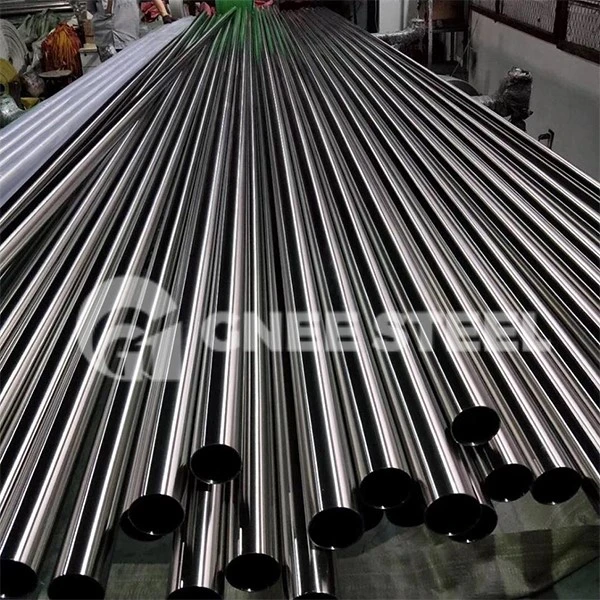
4. EP (Electro Polishing)
Electrolytic Polishing is an advanced surface treatment technology for stainless steel pipe and other metal materials for surface polishing and anti-corrosion treatment. The following are the main features and advantages of electrolytic polishing: Bright surface: Electrolytic polishing can make the surface of the steel pipe to achieve a bright, smooth, clean effect, showing a bright luster. Improve corrosion resistance: Through electrolytic polishing treatment, a uniform chromium oxide film layer can be formed on the surface of the steel pipe, which can effectively improve the corrosion resistance of the steel pipe, making it more durable to use. The best surface treatment method: Electrolytic polishing is an efficient, environmentally friendly and controllable surface treatment method, which can adjust the corresponding process parameters according to different needs and materials to realize the best surface treatment effect. Higher cost: Compared with traditional surface treatment methods such as mechanical polishing and chemical polishing, electrolytic polishing has higher equipment and process costs, requiring more investment and technical support. Higher requirements on surface quality: Electrolytic polishing has higher requirements on the quality of the steel pipe surface, if there are serious scratches, holes, slag entrapment, precipitates and other problems on the surface of the steel pipe, it may affect the success rate of electrolytic polishing. Controllable thickness of chromium oxide film layer: By controlling the parameters such as voltage, current, acid composition and polishing time during the electrolytic polishing process, the thickness of chromium oxide film layer can be controlled to realize the surface treatment with different corrosion resistance and brightness requirements.


