A335 P5 Alloy Pipe vs. A213 T5 Alloy Pipe
Jul 11, 2025
Application of seamless steel pipes made of two alloy materials, A335 P5 and A213 T5
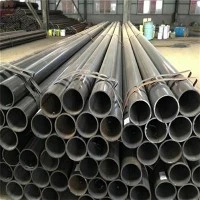
Both A335 P5 and A213 T5 are chromium-molybdenum alloy seamless steel pipes, with the core components of Cr5Mo (chromium content 4.00%-6.00%, molybdenum content 0.45%-0.65%), but there are differences in implementation standards and application scenarios.
A335 P5: Mainly used in high-temperature and high-pressure pipeline systems, such as petrochemical cracking furnace tubes, power plant high-temperature steam pipelines, high-temperature reactor connecting pipes in oil refining equipment, etc., especially suitable for harsh working conditions with temperature ≤650℃.
A213 T5: Focusing on the field of boilers and heat exchangers, such as power plant boiler superheaters, chemical industry heat exchanger tube bundles, ship power system condenser tubes, etc., it performs well in high-temperature environments with temperature ≤600℃.
Comparative analysis of implementation standards, manufacturing processes, and heat treatment methods
1. Implementation standards
A335 P5: Follows ASTM A335/A335M "Seamless Ferritic Alloy Steel Pipe Specification for High Temperature Service", focusing on the pressure bearing capacity and long-term high temperature stability of the pipeline.
A213 T5: Based on ASTM A213/A213M "Seamless Ferritic and Austenitic Alloy Steel Pipe Specification for Boilers, Superheaters and Heat Exchangers", emphasizing thermal fatigue resistance and corrosion resistance.
2. Production process
A335 P5: Manufactured by hot rolling or cold drawing, the wall thickness range is usually Sch40 to Sch160, and the outer diameter covers 1/2" to 36", suitable for large-diameter high-pressure pipelines.
A213 T5: Mainly hot rolling, cold drawing process is used for high-precision thin-walled tubes (wall thickness 2mm-140mm), outer diameter 19.05mm-762mm, meeting the precision requirements of heat exchanger tube bundles.
3. Heat treatment method
A335 P5: Normalizing + tempering process, normalizing temperature 1250°F (675℃), tempering temperature 1325-1375°F (715-745℃), to ensure the material's creep resistance at high temperatures.
A213 T5: Also normalizing + tempering, but the tempering temperature is slightly lower (usually 1200-1300°F/650-705℃), to optimize the material's thermal fatigue resistance.
Comparative analysis of chemical composition
| Element | A335 P5(ASTM A335) | A213 T5(ASTM A213) | Performance impact |
|---|---|---|---|
| C | ≤0.15% | ≤0.15% | Low carbon content ensures weldability and toughness |
| Mn | 0.30-0.60% | 0.30-0.60% | Improve strength and hardness |
| Si | 0.50-1.00% | ≤0.50% | A335 P5 has a higher silicon content, slightly better heat resistance but slightly lower toughness |
| Cr | 4.00-6.00% | 4.00-6.00% | Provides corrosion resistance and high temperature strength |
| Mo | 0.45-0.65% | 0.45-0.65% | Enhanced creep and fatigue resistance |
| P/S | ≤0.025% | ≤0.025% | Strictly control impurities and reduce brittleness |
Comparative analysis of mechanical properties
| index | A335 P5(ASTM A335) | A213 T5(ASTM A213) | Difference Analysis |
|---|---|---|---|
| Tensile Strength | ≥415 MPa | ≥415 MPa | The strength of the two is equivalent, meeting the high temperature pressure requirements |
| Yield Strength | ≥205 MPa | ≥205 MPa | Same standard requirements, suitable for high pressure conditions |
| Elongation | ≥30%(Vertical) | ≥30%(Vertical) | A213 T5 cold drawing process can be increased to more than 35% |
| Impact toughness | ≥42 J(-20℃) | ≥34 J(0℃) | A335 P5 has better low temperature toughness and is suitable for cold regions |
| Hardness | ≤221 HBW | ≤163 HBW | A335 P5 has higher hardness and better wear resistance |
Comparative analysis of application fields
1. Typical scenarios of A335 P5
Petrochemical industry: refinery hydrogenation reactor pipelines, ethylene cracking furnace tubes
Power industry: supercritical power plant main steam pipelines, high-temperature reheat steam pipelines
Coal chemical industry: high-temperature synthesis gas pipelines of coal-to-gas projects
2. Typical scenarios of A213 T5
Power plant boilers: superheater tube bundles, reheater pipelines
Chemical equipment: acetic acid/urea production unit heat exchangers
Shipbuilding: diesel engine exhaust system high-temperature pipes
Precautions for material selection and procurement
1. Technical parameter matching
A335 P5 (temperature resistance ≤ 650℃) is preferred for high-temperature conditions, and A213 T5 (temperature resistance ≤ 600℃) is preferred for heat exchanger scenarios
A335 P5 must be used in low-temperature environments (below -20℃), and its impact toughness is better
2. Key points of quality control
Suppliers are required to provide ASME certification and third-party test reports (tensile, impact, hardness, grain size)
Check production process records and confirm that heat treatment parameters meet ASTM standards
3. Cost optimization strategy
Bulk purchases can be negotiated for fixed-length processing (such as A213 T5 customized length ±1mm) to reduce cutting losses
Pay attention to the possibility of substitution between A335 P5 and A213 T5, which can be used interchangeably in some scenarios to reduce costs