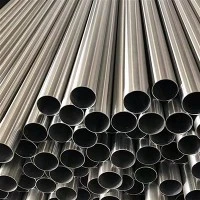
SA 106 vs SA 333 Pipe: Temperature Range, Chemistry and Impact Testing Compared
Mar 20, 2025
Two Standards Within the Same ASME System
SA 106 and SA 333 are the ASME designations for two carbon steel pipe specifications that sit side by side in the boiler and pressure vessel code, and they are technically identical to ASTM A106 and ASTM A333 respectively. One is written for hot service, the other for cold service. Understanding where each is permitted avoids the most common specification error in low-temperature piping, which is to order a high-temperature grade into a cryogenic duty or the reverse.
Temperature Ranges and Design Intent
SA 106 - seamless carbon steel pipe for high-temperature service, produced in Grades A, B and C. It is intended for boilers, steam lines and petrochemical equipment such as water walls and economisers, and pressure codes list Grade B for service up to 427 degrees Celsius.
SA 333 - seamless and welded carbon and alloy steel pipe for low-temperature service, produced in several ferritic grades with Grade 6 the most common. Grade 6 is impact tested at minus 45 degrees Celsius and is used for liquefied natural gas transfer, refrigeration circuits, cryogenic storage and low-temperature pressure equipment.
The two ranges only overlap near ambient temperature, and even there the qualification logic is different, because SA 333 carries a mandatory toughness test and SA 106 does not.
Chemistry and Mechanical Requirements
| Item | SA 333 Grade 6 | SA 106 Grade B |
|---|---|---|
| Base material type | Low-temperature carbon steel with controlled cleanliness | Carbon steel for elevated temperature |
| Carbon, maximum | 0.30 percent | 0.30 percent |
| Manganese | 0.29 - 1.06 percent | 0.29 - 1.06 percent |
| Phosphorus, maximum | 0.025 percent | 0.035 percent |
| Sulphur, maximum | 0.025 percent | 0.035 percent |
| Silicon, minimum | 0.10 percent | 0.10 percent |
| Minimum tensile strength | 485 MPa | 415 MPa |
| Minimum yield strength | 240 MPa | 240 MPa |
| Notched-bar impact test | Required at the temperature stated in the specification | Not required by the base specification |
| Product forms covered | Seamless and welded | Seamless |
Chromium and silicon appear in SA 106 only as residual or deoxidation elements; the standard does not rely on deliberate alloying for its high-temperature behaviour, which comes from the ferritic-pearlitic structure and from normalising. SA 333 Grade 6 instead targets notch toughness through low sulphur and phosphorus, controlled carbon and a normalised delivery condition. Note that neither standard sets a hardness acceptance limit; where hardness limits are imposed they come from the purchaser's specification or from sour-service requirements.
Impact Testing and Heat Treatment
Low-temperature qualification is a test-based exercise rather than a chemistry-based one. SA 333 requires that Charpy V-notch specimens be taken from the pipe body, and for welded pipe from the weld and heat-affected zone, and that the absorbed energy at the specified test temperature meet the standard's acceptance value for the relevant specimen size and orientation. Normalising, or normalising followed by tempering, is used to refine grain size and stabilise toughness after forming. SA 106, in contrast, is accepted on tensile and chemical results, and when a project needs impact data for a high-temperature grade it must be ordered as a supplementary requirement with a test temperature agreed between purchaser and manufacturer.
Ordering, Substitution and National Equivalents
State the design metal temperature, the applicable pressure code and the required low-temperature impact test temperature when the duty is cold, because these three items, not the nominal grade alone, decide acceptability.
Do not substitute SA 106 for SA 333 in low-temperature service, or SA 333 for SA 106 in sustained high-temperature service, without a documented engineering review and the agreement of the code authority.
Chinese low-temperature seamless steel pipe is produced to the GB/T 18984 family with grades such as 16MnDG, 10MnDG and 09Mn2VDG, while high-temperature boiler and heat exchanger tube duties are served by the GB/T 5310 and GB/T 3087 families. These are separate systems, so acceptance data are not automatically interchangeable with ASME grades.
Confirm whether the pipe is to be seamless or welded, since SA 106 is a seamless specification and welded product must be ordered to a standard that covers it.
Frequently Asked Questions
Q: Are SA 106 and ASTM A106 the same specification?
Yes. The ASME SA designation adopts the ASTM specification for use in the boiler and pressure vessel code, so SA 106 and A106 describe the same product requirements.
Q: What is the maximum temperature for SA 106 Grade B?
Pressure codes list it for service up to 427 degrees Celsius, which is 800 degrees Fahrenheit. Above that limit the allowable stress falls away and a different grade or alloy is required.
Q: What is the lowest temperature for SA 333 Grade 6?
It is impact qualified at minus 45 degrees Celsius, and the applicable code sets the lowest design metal temperature at which the grade may be used.
Q: Does SA 333 Grade 6 contain nickel or other low-temperature alloying elements?
Grade 6 is a carbon steel grade rather than an alloy steel grade. Other grades in the same specification carry alloying additions, so the grade suffix must always be stated on the order.
Q: Can SA 333 pipe be supplied in welded form?
Yes. The specification covers welded pipe provided the weld and heat-affected zone meet the impact requirement, which usually means a suitable heat treatment after welding.
Q: Why is a low-temperature grade usually more expensive than a high-temperature grade?
Because of tighter impurity limits, mandatory impact testing and the additional heat treatment. The cost difference is the price of fracture resistance, not simply a heavier wall.