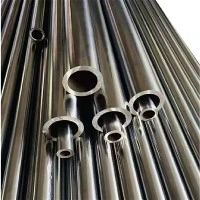
What material is used for economizer tubes
Jul 09, 2025
The selection of economizer tube materials needs to be determined according to boiler parameters, medium temperature and corrosion resistance requirements, and is mainly divided into the following two categories:
1. Classification by major material categories
Cast iron pipes
Applicable scenarios: low-pressure small and medium-sized boilers with working pressure ≤2.5MPa, strong resistance to flue gas acid corrosion.
Limitations: low pressure bearing capacity, heavy weight, and cannot be used for boiling economizers.
Steel pipes (mainstream choice)
Core advantages: high pressure resistance (≥9.8MPa), high temperature resistance (≤650℃), suitable for large power station boilers.
Forming process: all are seamless steel pipes, without weld hazards.

2. Specific materials of steel pipes
(1) Carbon steel series
20G carbon steel:
Application: economizer tubes with wall temperature ≤450℃ (such as medium temperature section).
Features: low cost, good welding performance, but weak resistance to high temperature oxidation.
SA-210C (25MnG): Carbon manganese steel, 20% stronger than 20G, used for water-cooled walls and economizers with temperatures ≤500°C.
(2) Alloy steel series
15CrMoG: Chromium-molybdenum alloy steel, better temperature resistance than carbon steel, suitable for medium-temperature and high-pressure sections (300–580°C).
T91/T92 (high alloy): Contains chromium, molybdenum, vanadium and niobium, used in supercritical boiler high-temperature sections (≤650°C), such as reheater inlet pipes.
(3) Stainless steel series
316L stainless steel: Applicable: low-temperature section (tube wall ≤70°C), resistant to acid dew point corrosion (such as acidic environment with flue gas condensation).
ND steel (09CrCuSb): Resistant to sulfuric acid dew point corrosion, used in low-temperature economizers with flue gas temperatures of 100–130°C. ️
 3. Special structural materials
Fin tube:
Material: The base tube is 20G carbon steel or 15CrMoG, and the welded/rolled steel fins expand the heating surface.
Use: Membrane economizer (such as H-type fin tube), improve heat exchange efficiency and reduce ash accumulation.
4. Key factors for selection
| Items | Material Selection Guide |
|---|---|
| Pressure | High pressure (>2.5MPa) → Seamless steel pipe |
| Wall temperature | ≤70℃→316L; 70–110℃→ND steel; >450℃→alloy steel |
| Flue gas corrosion | High sulfur fuel → stainless steel or ND steel |
| Economical | For non-corrosive conditions, 20G or SA-210C carbon steel is preferred. |